In 1920 Women’s College Hospital established the Department of Laboratories and Dr. Vivian Marvin Laughlen (1920-1945) was appointed Chief of Laboratories. In 1945 Dr. Laughlen was followed by Dr. Eva Mader MacDonald (1945-1952); Dr. Alice Gray (1952-1980) and Dr. Ali H. Qizilbash (1980-1981). In 1981 the Department of Laboratories was divided into 2 new departments: the Department of Clinical Laboratories and the Department of Pathology. Dr. Kathleen Givan (1981-1992) was appointed Chief of Clinical Laboratories and was followed by Dr. Mary Vearncombe (1993-1999). In 1999 the name of the department was changed to the Department of Microbiology and Dr. Andrew Simor (1999- ) was named Chief of Microbiology.
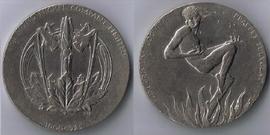
Chelmsford Valley District High School is a high school located in the community of Chelmsford, Ontario, part of Greater Sudbury. The school opened in 1953. Its name was later changed to the Chelmsford Valley District Composite School.
Robert Baden-Powell's book, Scouting for Boys, was first published in England in 1908. Shortly after, Scouts began forming all over Canada. In 1910, a Dominion Council was established and Governor General Earl Grey accepted the position of Chief Scout for Canada. The Boy Scouts Association was incorporated in the United Kingdom two years later. In June 1914, a Canadian branch of that organization - The Canadian General Council of the Boy Scouts Association - was incorporated. In 1920, the International Conference, to which all recognized Boy Scout associations belonged, was formed.
The first recorded date for the Our Lady of Mercy Boy Scout Association in Coniston, Ontario was 1948. The first entry in their Minute Book begins with the last meeting of the year in 1948 so there most likely was another Minute Book created before this, possibly for years prior to this date, and lost. Prior to their formation, there was already a Coniston Boy Scout Association. The first troop was affiliated with the Anglican Church and this, the second troop, was formed to be affiliated with the Catholic Church (the french speaking boys attended Our Lady of Mercy Church while the english speaking boys attended St. Paul's Church). Both troops existed at the same time in Coniston during the entire life of the Our Lady of Mercy Boy Scout Association and frequently participated in events and fundraising together. The Our Lady of Mercy Boy Scout Association Board held their meetings in the basement of the Separate School in Coniston every month. Troop meetings tended to take place on Tuesday nights at 7pm but they would have events on other days. Activities of the troop included camping, hiking, first aid training, hockey, watching National Film Board movies, and father son banquets. They were funded with Apple Day sales, Christmas Card sales, and various other fundraising activities.
During the summer of 1953, the Our Lady of Mercy Boy Scout Association won the 'All Over' trophy at summer camp, signifying that they were the best cub pack from the Sudbury District attending the camp. In 1955, three Scouters resigned; one to attend school out of town and the other two, who were the Cub Masters Mr. & Mrs. Gobbo [Art Gobbo & Evelyn Gobbo]. In September 1956, the 1st Coniston Troop approached the 2nd Troop with the proposition of forming one group for Coniston. Bishop Dignan gave permission for boys from the 1st Troop to join, provided the 2nd Troop had control of the troop. During 1956 and 1957, the troop had difficulties recruiting Cub Masters who had the time to volunteer and the group folded by 1958 with the remainder of their bank balance being donated to the 1st Coniston Group Committee on November 12, 1962.
Presidents (Chairmen)
Edward J. Orendorff 1948 - 1952, May 1953 -after 1957 (also principal of Coniston Continuation School)
O. Paradis 1952 - 1953
G. Maher January - May 1953
Chaplains for Troop
Father Fortin 1948 - 1951
Father Lafontaine 1953
Father Proulx 1956 - 195?

Pioneer Construction was founded in Sudbury by Joe Salvalagio, Pietro Coltinari, and Mario Negusanti in 1938. The team hired Alex Macgregor as manager shortly after.
By the 1950s Pioneer Construction was tackling city and highway road construction, sewer and watermain projects, while expanding into the mining, forestry and railroad industries. In 1954, Pioneer Construction was home to the first asphalt plant in the North. Company ownership transferred to Grant Henderson, Peter Crossgrove and then to Jamie Wallace in 1976. Today Pioneer Construction builds and maintains highways and municipal roads across Northern Ontario.
In 1910 the Canada Synod and Synod of Central Canada of the Lutheran Church entered into an agreement to establish a Lutheran Seminary. Though the location first proposed for the Seminary was Toronto, Waterloo was selected when its citizens offered a tract of land on the boundary of the town. The choice of location was affected, too, by the fact that the majority of Lutherans in Ontario lived in the vicinity of Waterloo and Berlin (Kitchener). In 1911 the Evangelical Lutheran Seminary of Canada opened its doors.
Facilities for pre-theological education were established in 1914 with courses leading to senior matriculation given in Waterloo College School.
In 1924 the Waterloo College of Arts, providing courses in post-secondary education in a four year program, was established. In 1925 the Faculty of Arts, under the name of Waterloo College, affiliated with the University of Western Ontario. Waterloo College soon began to offer Honours degree programs in the arts.
The affiliation with the University of Western Ontario ended in 1960 when the Seminary obtained a revised charter changing the name of the institution to Waterloo Lutheran University.
On November 1, 1973, Waterloo Lutheran University became Wilfrid Laurier University, one of Ontario's provincially assisted universities after Bill 178 was given Royal Assent by the Lieutenant Governor (and former Waterloo Lutheran University Chancellor) William Ross Macdonald.
In September 1999, Laurier opened a campus in Brantford, Ontario.
The Mond Nickel Company Limited was a United Kingdom-based mining company, formed on September 20, 1900, licensed in Canada to carry on business in the province of Ontario, from October 16, 1900. The firm was founded by Ludwig Mond (1839-1909) to process Canadian ore from mines near Sudbury, which were then shipped to Mond's works in Britain for final purification.
The first of Mond's Canadian mining properties located in Denison Township, was purchased from Ricardo McConnell and associates in 1899. this site renamed the Victoria Mine began development in 1900. About the same time, Mond's refinery at Clydach, near Swansea, Wales, was being erected.
Around the same time, Mond purchased from McConnell, second mining location the Garson Mine which was developed later on, in Garson Township.
In 1911 the Mond company began construction of a new smelter at Coniston, Ontario. In that year, the company purchased the mining rights at Frood Extension about 8 miles from Coniston, though no serious development took place at this location until the 1920s. By 1928 INCO began development of its Frood Mine, when it was determined that it and Mond's Frood Extension were part of the same ore body, Alfred Mond negotiated an agreement pursuant to which in 1929 the interests of the Mond Nickel Company were merged into the International Nickel Company through the issue of the latter's stock in exchange for the outstanding stock of Mond.
Gallery 44 Centre for Contemporary Photography is a non-profit, artist-run centre dedicated to photography and located in Toronto. Originally known as The Niagara Street Photographers’ Centre and Workspace of Toronto, the collective ran a gallery space called Gallery 44. The organization was also sometimes known as Photo 44. The collective was founded in September 1979 by a group of photographic artists with a need for shared darkroom and studio space and to create an environment supportive of photography and its evolving practices. They were incorporated in October 1984. The collective offers opportunities to its members, national and international artists to exhibit and publish their work and also provides educational programming, non-commercial traditional darkroom facilities and digital imaging services.
Gallery 44 Centre for Contemporary Photography was originally located at 109 Niagara Street, where they first began mounting exhibitions and offering photography workshops. In 1986 they moved to 183 Bathurst Street to provide larger facilities to their growing membership. The Education in the Schools program was initiated in 1987 to provide photographic education at the elementary and secondary school levels. In 1994, they moved to their current location at 401 Richmond Street West. 401 Richmond is a hub for the local arts community housing artist-run centres, galleries, arts organizations and artist studios. Gallery 44 Centre for Contemporary Photography continues to support the photographic community by offering affordable darkroom rentals, digital imaging services, exhibition space, workshops, artist residencies, print sales, hosting portfolio reviews and publishing catalogues and books.
The Gershon Iskowitz Foundation was started by artist Gershon Iskowitz in 1985, with the mandate of awarding the Gershon Iskowitz Prize to a mature practising artist; since 2007 the Foundation has partnered with the Art Gallery of Ontario to administer the Gershon Iskowitz Prize at the AGO.
Example Corporation history (ISAAR 5.2.2)
Goldwin Smith (1823-1910) was a prominent journalist, academic and liberal reformer who spent the latter part of his life in Toronto. Born in Reading, England, he was educated at Eton College and Oxford University, and was the Regius Professor of History at Oxford from 1858 to 1866. Smith began to publish widely on history and political reform. He moved to the United States in 1868, and taught briefly at Cornell University, to which he retained a connection for the rest of his life. He moved to Toronto in 1871, and married Harriet Elizabeth Mann (née Dixon) the widow of William Henry Boulton, in 1875. Smith thus became master of the Grange house and estate in central Toronto, and became a pillar of Toronto society. His journalistic career included a brief employment at the Globe, after which he joined independent publishing ventures including the Canadian Monthly and National Review and the Evening Telegram. He then published his own journal, the Bystander, sporadically between 1879 and 1890. Smith also published widely in other local and international news journals. He took part in important civic and educational reform initiatives, including serving on the new board of the University of Toronto. The Grange remained his wife's property and was willed by her to the city of Toronto to serve as a public art gallery, later becoming the first home of the Art Gallery of Ontario.